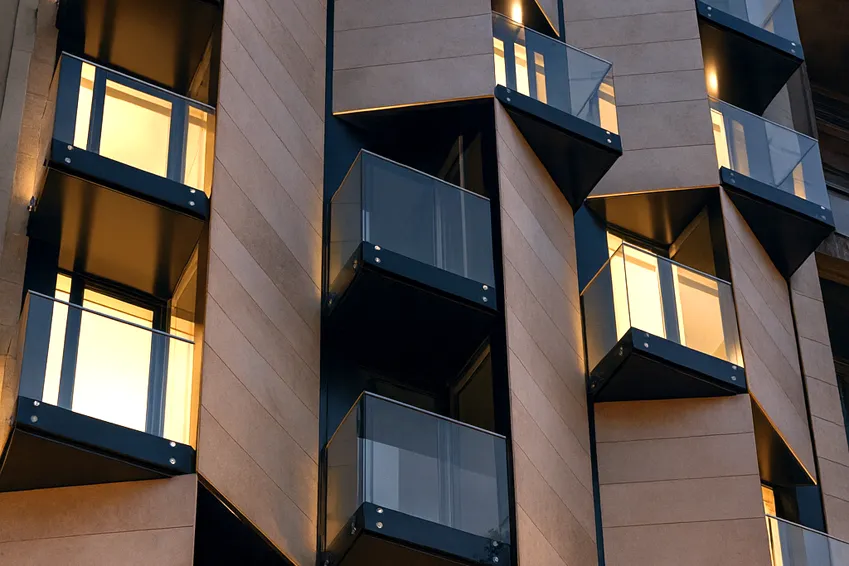
HPL façade is one of the most popular choices in modern architectural design and building exteriors. Thanks to its durability, aesthetic appeal, and wide range of colors and patterns, HPL has earned a special place in the façade industry. It not only meets the creative demands of architects but also provides excellent resistance to weather conditions, humidity, and UV radiation.
Installation Methods
1. Dry System:
HPL panels are fixed to a metal or aluminum substructure using screws, rivets, or clips.
Ideal for exterior facades as it allows ventilation behind panels.
2. Wet System:
Panels are installed using special adhesives or mortar.
Mostly used for interior applications.
3. Rail or Clip System:
Panels are mounted with hidden fasteners or special rails.
Provides a cleaner look with uniform joints.
---
🌟 Advantages of HPL
Highly resistant to moisture, rain, and UV rays.
Scratch and impact resistant.
Durable and low-maintenance.
Wide range of colors and finishes (wood, stone, solid colors, etc.).
Fire and chemical resistant.
Fast installation and flexibility for complex designs.
Eco-friendly and recyclable.